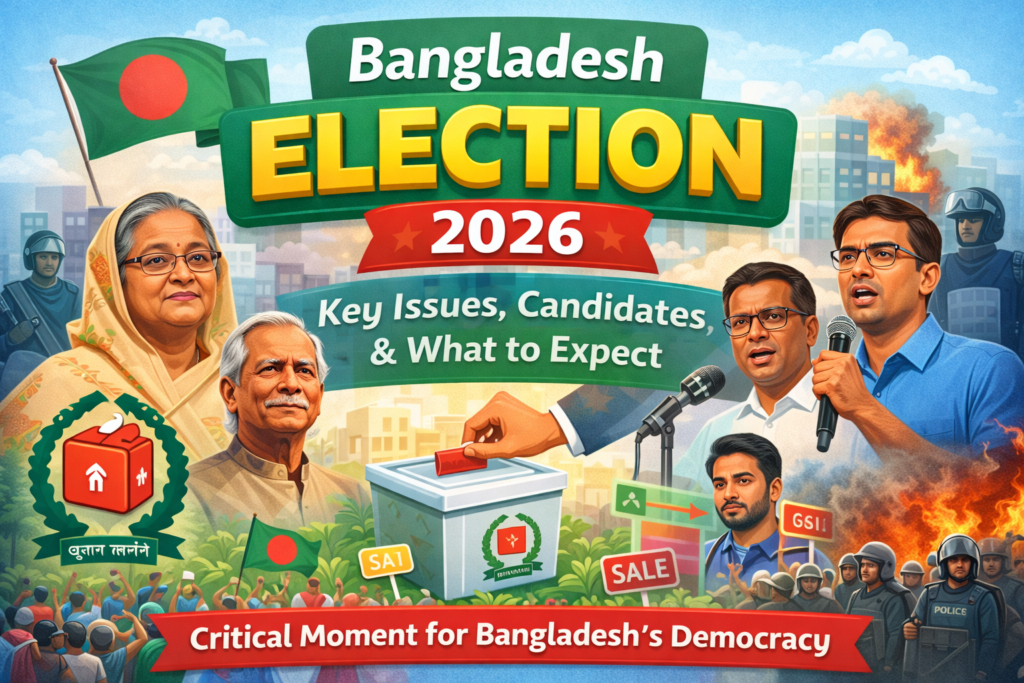

🗳️ Bangladesh Election 2026: What You Need to Know
Bangladesh is gearing up for one of the most closely watched national elections in its recent history. Scheduled for February 12, 2026, this election will be the first parliamentary vote since the major political upheaval in 2024 that ousted long-time leader Sheikh Hasina and ushered in an interim administration led by Nobel Laureate Muhammad Yunus. (Wikipedia)
📅 Election Date & Background
The 13th National Parliamentary Election in Bangladesh is set for February 12, 2026, with all 300 parliamentary seats up for election. The vote will also include a referendum on democratic reforms, commonly referred to as the “July Charter,” aiming to reshape key aspects of Bangladesh’s governance framework. (Wikipedia)
This election is happening after dramatic political changes — including mass protests in 2024 and the departure of Sheikh Hasina from power — making the 2026 vote particularly significant for the future of democracy in the country. (The Times of India)
🏛️ Main Political Players
Bangladesh’s political landscape ahead of the 2026 election includes:
- Bangladesh Nationalist Party (BNP): Considered a leading contender, the BNP seeks to return to power amid strong public engagement and calls for reforms. (www.ndtv.com)
- Jamaat-e-Islami: An Islamist party re-emerging after the 2024 uprisings, advocating conservative governance and anti-corruption measures. (www.ndtv.com)
- National Citizen Party (NCP): A younger, reform-oriented force focused on constitutional change and civil rights. (www.ndtv.com)
- Bangladesh Awami League: Once the dominant political force under Sheikh Hasina, the party has rejected the election schedule, citing concerns about fairness and participation conditions. (Business Standard)
The ban on official Awami League activities has sparked controversy, with critics arguing this affects voter representation and the overall legitimacy of the polls. (Business Standard)
📊 Key Election Issues
Several major issues are driving public debate and electoral campaigns:
1. Democratic Reform & Referendum
The February 12 election will be paired with a referendum on constitutional reforms that seek to strengthen judicial independence, expand human rights protections, and limit executive overreach. (Khaleej Mag)
2. Political Participation & Fairness
The absence of the longtime ruling Awami League has raised questions about inclusivity and fairness. The party has demanded removal of restrictions and a neutral caretaker government before elections. (The Tribune)
3. Security Concerns
There has been a rise in election-related violence and tensions, including incidents affecting voters, minority communities, and political activists — raising fears about safety on polling days. (The Economic Times)
4. Press Freedom & Civil Rights
Journalists and media outlets have reported threats and attacks, leading to calls for greater protection and freedom of speech ahead of the elections. (AP News)
🌍 What This Means for Bangladesh
The 2026 election is about more than choosing lawmakers — it’s viewed as a decisive moment for Bangladesh’s democratic institutions and political stability. International observers, including the EU, have signaled a focus on fairness and minority rights, underscoring global interest in how the polls unfold. (The Times of India)
Experts and citizens alike are watching to see whether this election will usher in a more inclusive, stable political era or deepen existing divides. The result, and how it’s received domestically and internationally, will shape Bangladesh’s trajectory into the next decade.
🧠 Why This Blog Topic Matters
Writing about the Bangladesh 2026 election can:
- engage readers interested in global politics and democracy
- provide context on South Asian geopolitical shifts
- explain how electoral reforms influence governance
- highlight voter rights and civil liberties in transitional elections